#8 Representing Fatherhood in Film – Presence, Absence and Perspectives
For our new episode, we talk about fatherhood. We ask how fatherhood is constructed on screen: Whose perspective do we inhabit? What kinds of masculinity are attached to being a father? And what happens when love, responsibility, work, money and social expectations pull in different directions?
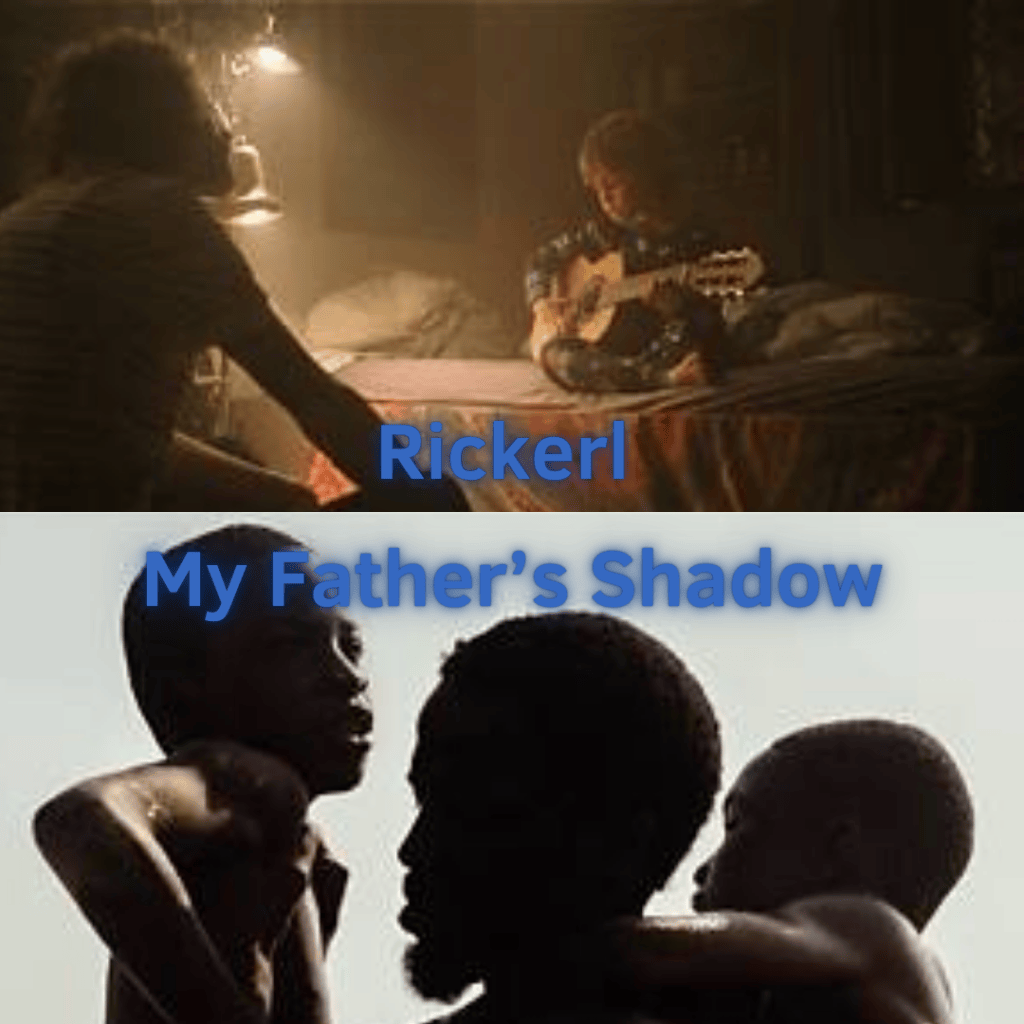
We discuss three films from different contexts: Adrian Goiginger’s Rickerl – Musik is höchstens a Hobby (AT/DE 2023), Barbara Wolfram & Paulus Wagner’s short film Walter L. (AT 2025), and Akinola Davies Jr.’s My Father’s Shadow (UK/Nigeria 2025).
In Rickerl, fatherhood is entangled with artistic ambition, precarious living and inherited patterns of failure. Rickerl loves his young son Dominik, but love alone does not make him reliable. The film asks what it means to take responsibility when you are struggling to organise your own life and who is expected to become responsible when a father remains chaotic, artistic and lovable.
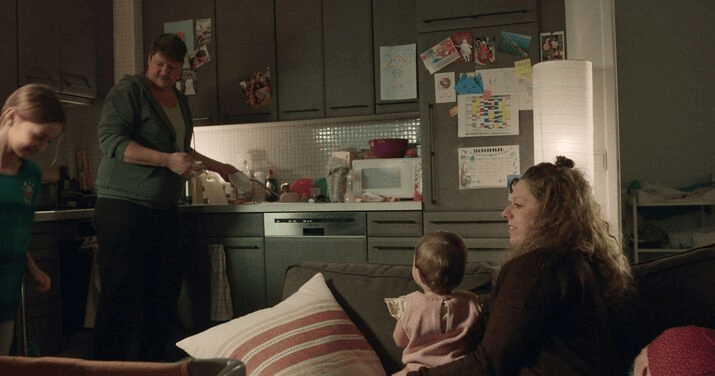
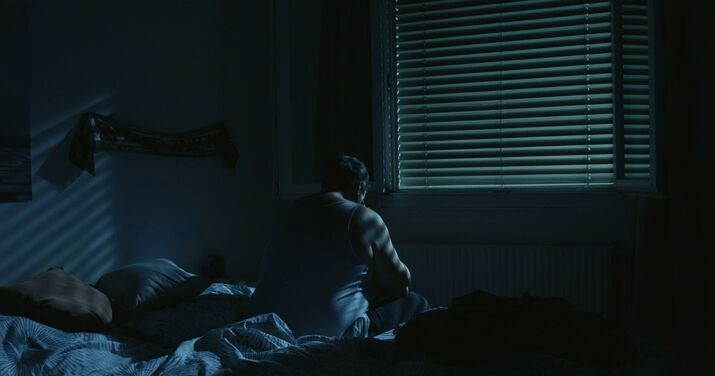
Walter L. moves the question directly into the workplace. Walter is a truck driver whose daughter Jenny’s football final coincides with an increasingly precarious working situation. When he chooses to be present for his daughter, that decision has immediate material consequences: he is suspended without pay. Here, fatherhood is not simply a matter of individual choice. Work, digitalisation and class determine what kind of father a man can afford to be.
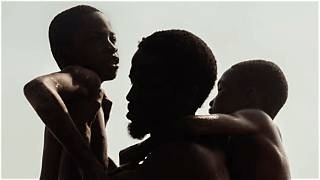
My Father’s Shadow takes us to Lagos during the political crisis surrounding Nigeria’s annulled 1993 presidential election. Two young brothers spend a day with their estranged father Folarin, reconnecting with him while the city around them becomes increasingly unstable. The film complicates the easy equation of absence with failure: Folarin’s distance from his children is also connected to duty, protection and providing. What if the very responsibilities that are supposed to make a father a good provider also produce his absence?
Across the three films, we ask: Is “being there” a privilege? Who can actually choose presence when work, money and social expectations intervene? What kinds of fatherhood are rewarded, forgiven or punished? And are fathers allowed a kind of narrative forgiveness that mothers are not?
We also look at the relationship between fatherhood and masculinity. Are contemporary films really expanding the possibilities of being a man and a father or are they simply offering different ways for men to prove their worth?
And finally: What would change if we looked at these fathers primarily from the perspective of the child’s needs rather than the father’s intentions? Where are the mothers, co-parents and invisible care workers in these stories?
Further films we refer to
We briefly bring two other fatherhood narratives into the discussion as counterpoints: Charlotte Wells’ Aftersun (UK/USA 2022), where fatherhood is reconstructed through an adult daughter’s fragmented memories, and Gabriele Muccino’s The Pursuit of Happyness (USA 2006), perhaps one of the clearest mainstream versions of the heroic “provider father”.
Together, the films allow us to move from the father who struggles to become reliable, to the father whose care clashes with the labour market, to the father whose duty to provide contributes to his absence and finally to questions of memory, vulnerability and the cultural fantasy of the successful father.
What kinds of fatherhood do contemporary films make visible?
#8 Shownotes:
Episode with Adrian Goiginger „Die beste aller Welten“ (in German)
Episode with Mo Harawe „The Village Next to Paradise“ (in German)
Soundtrack Rickerl Voodoo Jürgens
ReFraming Masculinities Research Project / Filmakademie Wien – mdw
#8 Films
Rickerl – Musik is höchstens a Hobby (Adrian Goiginger, Austria/Germany, 2023) – WatchAUT Stream
Walter L. (Barbara Wolfram & Paulus Wagner, Austria, 2025)
My Father’s Shadow (Akinola Davies Jr., United Kingdom/Nigeria, 2025) – Mubi
Short counterpoints
Aftersun (Charlotte Wells, UK/USA, 2022)
The Pursuit of Happyness (Gabriele Muccino, USA, 2006)
#8 Further Reading
Hamad, H. (2013). Postfeminism and paternity in contemporary US film: Framing fatherhood. Routledge.
Barnett, K. (2020). Fathers on film: Paternity and masculinity in 1990s Hollywood. Bloomsbury Academic.
Gallais, C. (2023). Fatherhood and masculinities: Intersections of care, bodies and race. Palgrave Macmillan. doi.org/10.1007/978-3-031-34132-8
Hunter, S. C., Riggs, D. W., & Augoustinos, M. (2017). Hegemonic masculinity versus a caring masculinity: Implications for understanding primary caregiving fathers. Social and Personality Psychology Compass, 11(3), doi.org/10.1111/spc3.12307.


 NED WUASCHT - WIR GEH'N FISCH'N